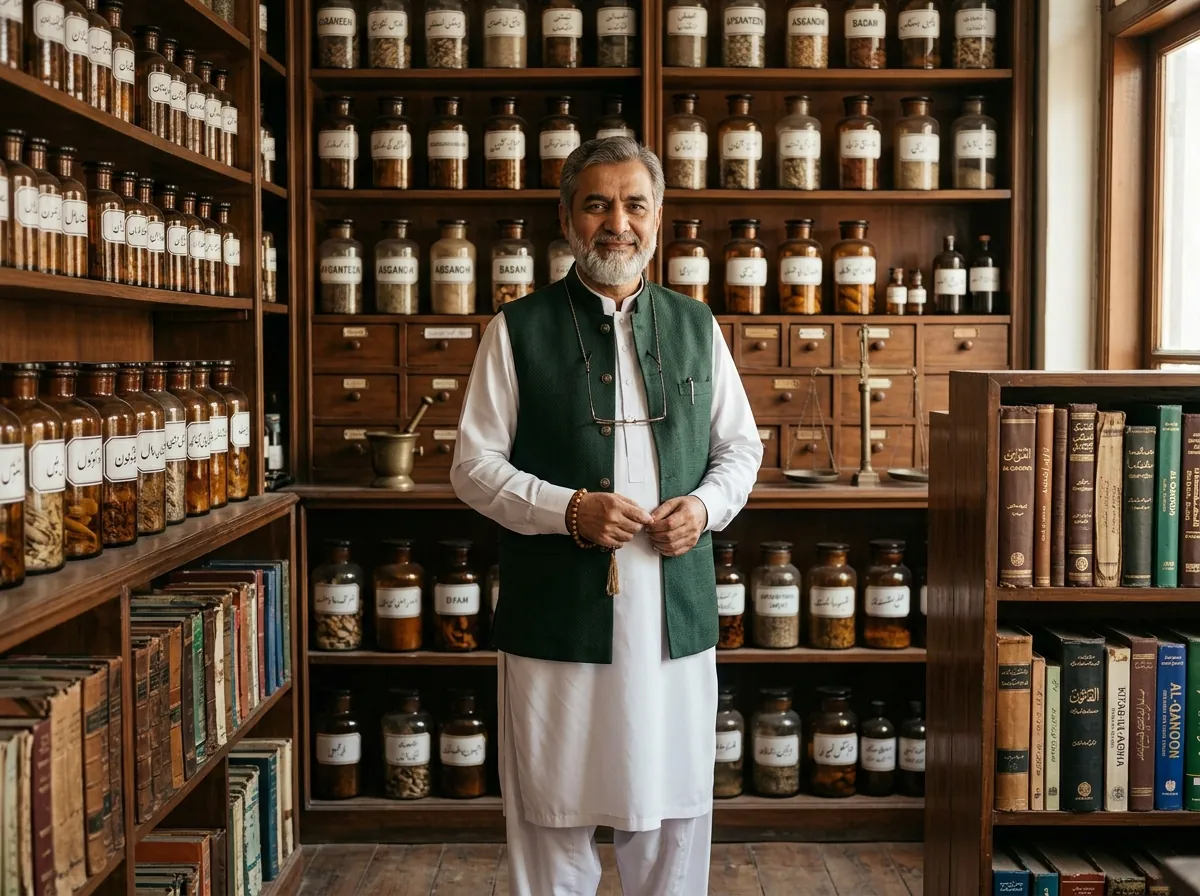
What is asgandh (ashwagandha)?
Asgandh is the dried root of Withania somnifera, a small shrub from the nightshade family that grows across Pakistan and India. The root has a strong smell that is often compared to a horse, which is where the Sanskrit name ashwagandha ("smell of a horse") comes from. In Pakistan, the most prized variety is known as Asgandh Nagori.
Asgandh ke fayde: traditional uses in Unani tibb
In Unani tibb, asgandh is classed as a muqawwi (strengthening) and muqawwi-e-bah (supporting male vitality) herb. Hakeems traditionally use it to:
- support strength, weight gain and recovery after weakness
- calm the nerves and support restful sleep
- support men's vitality in classical majoon formulas
- support joint comfort in older age
What does research say about ashwagandha?
Ashwagandha has more clinical research than most traditional herbs, though many trials are small and funded by extract makers.
- Stress: in a 60-day placebo-controlled trial in adults with chronic stress, a root extract reduced stress scores and cortisol levels compared with placebo.
- Strength and recovery: in an 8-week study of young men doing resistance training, those taking ashwagandha gained more muscle strength and size than the placebo group.
- Men's fertility: a study of infertile men reported improvements in semen quality and reproductive hormone levels after three months.
These results are promising but not conclusive. Effects depend on the extract, the amount and the person.
How to buy pure asgandh powder
Loose asgandh powder is frequently mixed with cheaper roots, starch or sawdust. To reduce the risk:
- Buy whole dried roots and have them ground in front of you, or from a seller you trust.
- Genuine root powder is off-white to light brown, with the characteristic strong, earthy smell and a bitter taste.
- A powder that is very white, smells of nothing, or tastes sweet is a warning sign.
- For capsules, look for the root content or extract standardization stated clearly on the label.
How is asgandh taken?
Traditionally, asgandh powder is taken with warm milk, often at night, or as part of a majoon. Capsules and extracts follow the amount printed on the label. Courses of a few weeks to a few months are typical in studies. Follow the label or a qualified hakeem's advice.
Asgandh side effects and who should avoid it
- Pregnancy and breastfeeding: avoid.
- Thyroid conditions: ashwagandha may raise thyroid hormone levels, so people on thyroid medication should consult their doctor.
- Liver: rare cases of liver injury have been reported. Stop and see a doctor if you notice yellow eyes, dark urine or unusual tiredness.
- Autoimmune conditions and immune-suppressing medicines: consult a doctor first.
- Sedatives and sleeping pills: asgandh may add to drowsiness.
- Stop two weeks before planned surgery.
- Mild stomach upset, loose stools or sleepiness can occur.